MATHS
QUARTERLY
WELCOME TO THE FIRST MATHS QUARTERLY PRESENTED BY THE MATHs CHANNEL


As with all of our sites, there is a visual connection to the kitchen to add a sense of activity and energy. We want diners to feel part of the action and observe the mastery in action. Tonki is a tonkatsu restaurant in Tokyo where the main restaurant space is a giant counter that wraps around the open kitchen. It is both functional and theatrical. We wanted our counter to have the same sense of choreographed chaos—stacked plates, brightly coloured appliances, sauce bottles peeking over the half wall—items are placed with precision and shaped by the chaos of service. Due to technical constraints, we needed to raise the kitchen floor level. As an unexpected outcome, this elevated the sense of theatre in a subtle but discernible way by mimicking the viewer to stage relationship more truthfully. The visitor slurps on their bowl of noodles under the warmth of the lighting feature—in contrast, a dramatic white light casts on the kitchen team.

Context is key—especially when the context is the iconic Battersea Power Station. Working with such a historic and important site is both a blessing and a curse. Sometimes, designing with constraints can be a relief, defaulting some choices to these constraints help to refine and narrow down the endless design directions and possibilities. We changed sites during the project to become part of the Arcade food hall, at which point a number of key decisions had been determined—both practical ones, such as the location of the extract and aesthetic ones, such as the finish of the tiled piers facing Turbine Hall A.
This meant our proposal needed to work with these constraints. We began building the floor plan with the extractor in place and selected material finishes that would compliment the tiles. One challenge of the project was the vast number of stakeholders involved, our proposal had to satisfy the project ‘design custodians’, landlord, building control, wider design team, the local authority and planning department to name a few—all the while, it was imperative that it aligned with the BAO values, branding and worked operationally.
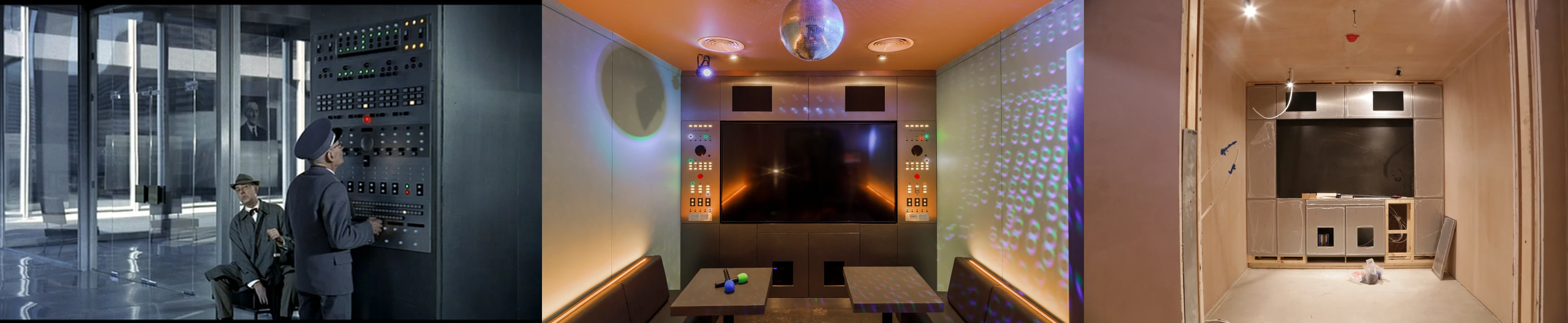
Our KTV rooms are the ultimate medium of escapism, with each room taking inspiration from a ‘Lonely Man’ film. Playtime is one such film, it follows the pursuit of the protagonist in the seemingly simple task meeting a business contact in Paris.
The film is a humorous take on modern life and all its contradictions and whimsies—it is noisy and chaotic but it is controlled. There is a scene with an over-engineered control panel, lights flash on and off with no different outcome. We took the atmosphere and aesthetic of the film and distilled it into our KTV room - the pale green lobby, the metal walls, the fake control panels.
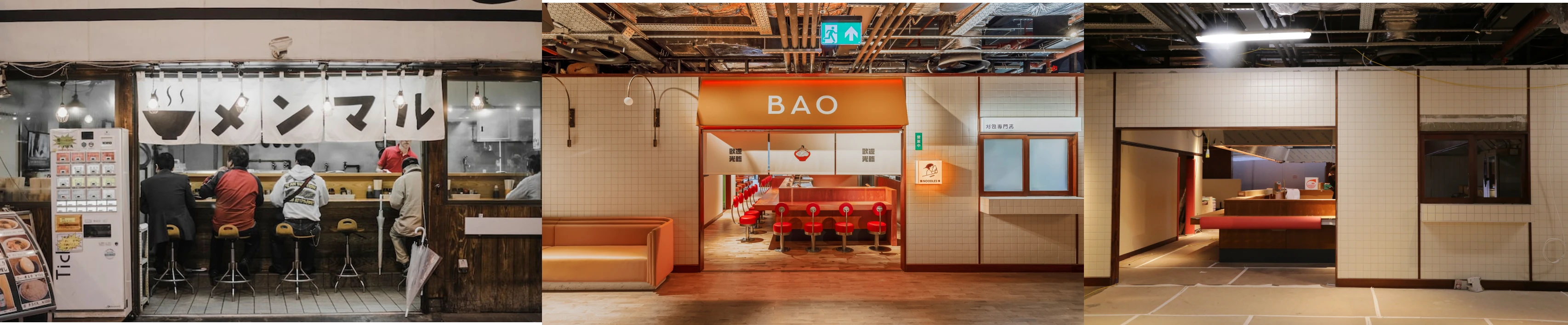
This was the first image we selected for the moodboard—the backs of diners framed by the shopfront. The view epitomises the ‘Lonely Man’ ethos, each diner immersed in the solitary enjoyment of eating noodles—next to each other but by themselves. Snippets of the kitchen and restaurant space can be seen through the opening and below the blinds. Evolving from this image, we re-created a set-like shopfront facing into Arcade food hall giving it the sense of a streetscape. The wall is clad in a utilitarian white tile, which opens up to a serving hatch and a decorative awning.
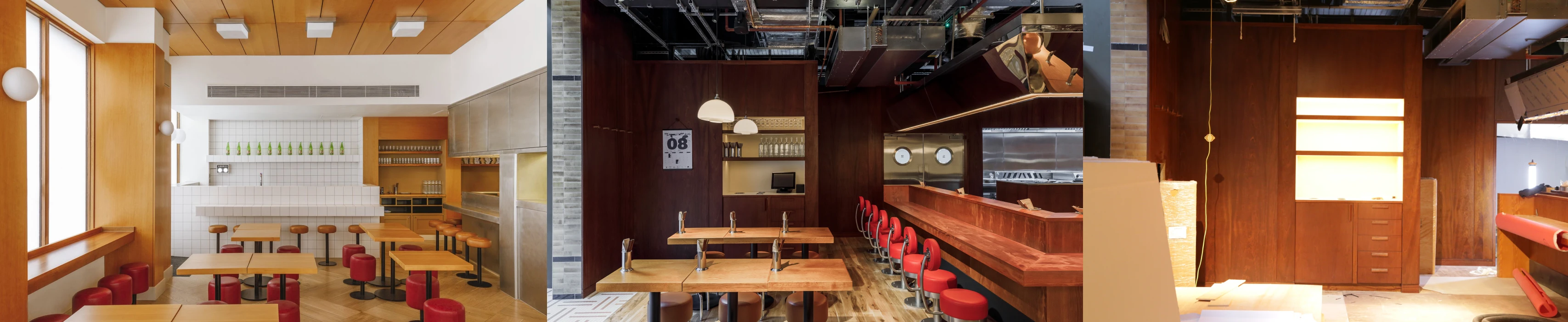
As the Battersea site is the second noodle shop, we wanted to create a thread with the Shoreditch site. The design challenge was for the proposal to feel aligned with the first noodle shop, whilst carving out its own Battersea feel. The space in Shoreditch uses cartoon-ish proportions to play with scale and exude cute-ness, so we applied this strategy to the Battersea site. The stools and chairs (with backs, you’re welcome) evolve from the furniture in Shoreditch, tweaked in materiality to reflect the metal of the lighting feature.
think food
serve design